
It’s that time of year again folks, when the fine summer days are gone and the cold winds, rain and blizzards move in. As we delve deep into our wardrobes to dig out our winter woollies, we do the same for our equine partners too. Those winter rugs that have been stored away in the back of the tack room for the past 6 months, gathering cobwebs and dust (unless, of course, you were been ultra efficient and had them cleaned and packed away in nice waterproof bags over the summer) – either way, the time has come for many of us to dust them down and put them to good use.
And we do this out of love; rugging our horses feels like the ultimate act of care, doesn’t it? OK, it also helps to keep them clean, which is also a huge bonus when you want to ride, but ultimately we want to protect our horses from the elements and keep them toasty. But as an equine massage and bodyworker, once rugging season gets underway, the muscles, fascia and posture tell me another side of the story.
Rugs can be an excellent management tool, but there is no escaping that they are a double-edged sword. The key is how you use them, to optimise the gains and minimise the negatives. So, on that note, let’s dive in and look at the pros and cons of rugs, and how they can be silently sabotaging your horse's soft tissue health.
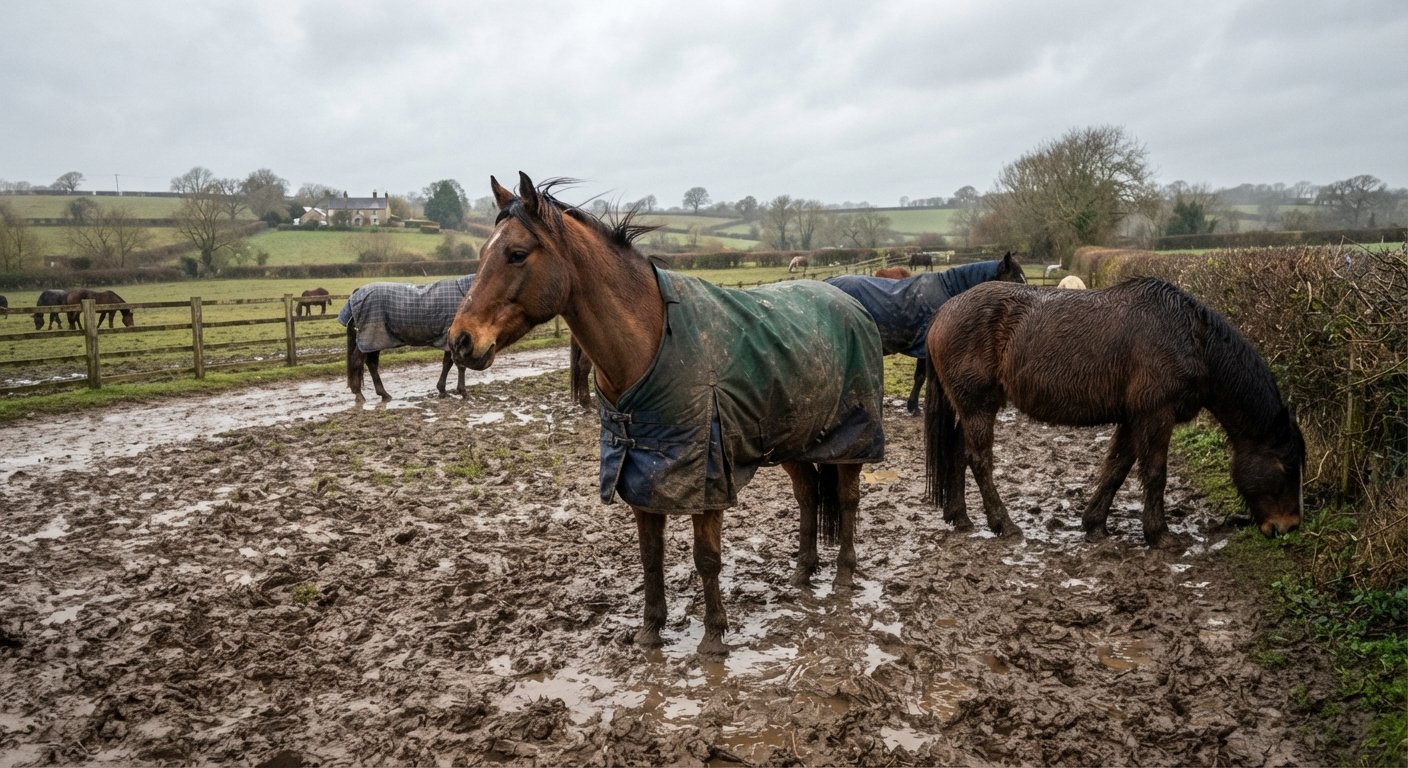
Did you know that rugs can be silently sabotaging your horse's soft tissue health?
The Pros: The power of a well-fitting rug
Rugging isn't inherently bad; in fact, for many horses it is a vital part of their winter routine, when used correctly, to enable them to cope with the cold, damp weather conditions good old blighty likes to throw at us.
Protection: For horses that are clipped, struggling with weight retention, older in years or suffering from chronic conditions such as arthritis, rugs are often a necessity. They act as an artificial barrier against driving wind and rain, supporting your horse’s built-in thermoregulation.
Muscle Suppleness: Cold weather can cause your horse to become tense, lifting their backs, standing awkwardly in an attempt to shelter from the elements and shiver to stay warm. A well-fitting rug keeps the large muscle groups of the back, shoulders and hindquarters warm and warm muscles maintain a better baseline elasticity, stay more fluid, and are less prone to acute strains that can result from sudden bursts of energy out in the paddock (we have all witnessed our ponies throwing a few shapes in the squally wind!).
Energy Conservation: By preventing heat loss, rugs can help ‘poor-doers’ or veteran horses allocate their calories toward maintaining body condition rather than trying to survive the elements.
Fitness: This is a controversial one, but having owned and competed horses myself I understand the importance of being able to maintain a level of fitness, even throughout the winter season, whether that is to simply enjoy weekend rides, compete in winter competitions or maintain a level of fitness to help prevent injury. A well-fitting rug helps to enable this by ensuring the horse is clean and dry for tack to be fitted.
The Cons: The hidden cost to soft tissue
While rugs keep the cold out, leaving them on constantly is doing more harm than good. Even the most perfectly fitted rug puts a surprising amount of physical strain on your horse’s muscles and skeletal frame. Let’s look at what happens beneath the lining:
Interruption of muscle fibres: Even a perfectly fitted rug creates static pressure across the withers, shoulders, chest, back, hips and quarters. This is heightened if a rug is heavy, tightly bucked or slips out of position (which, let’s face it my friends, is not uncommon). This localised compression causes the underlying muscles to remain in a constant low-level state of contraction, which over time reduces circulation, starving the muscle fibres of vital oxygen and nutrients. The result is often muscle spasms and trigger points that over time can develop into stress points, localised atrophy (muscle wastage) and reduced muscle function.
Dehydration of fascia: Fascia is the three-dimensional web of connective tissue that wraps around every single muscle, organ and bone within your horse’s body. Healthy fascia is fluid-based and slippery, designed to allow muscles fibres to glide smoothly over one another. Constant pressure from rugs causes the fascia to become dehydrated (imagine pressing down on a sponge causing all the water to flush out of it). Deprived of hydration, the fascia becomes sticky and dense, even rigid, forming adhesions that effectively becomes an invisible ‘straight-jacket’, restricting the horses overall freedom of movement.
If you are interested in learning more about fascia, I have written a specific blog on it which you can view by clicking this link: What’s all the fuss about fascia?
Compression of the nerves: Superficial fascia is rich in sensory nerve endings (more than muscle fibres themselves!). Rug pressure and repetitive friction over bony prominences cause micro-abrasions to the skin (ever noticed those patches where the hair has been rubbed away, often around the shoulders, hips and withers?) and compress these delicate nerve pathways. Continuous pressure can alter local nerve function, dulling the horse’s proprioception (spatial awareness) and initial signs are often low-grade discomfort that presents itself as ‘grumpiness’ during grooming, tacking up or rugging. Just imagine wearing an item of clothing that was constantly chaffing agains’t your skin…
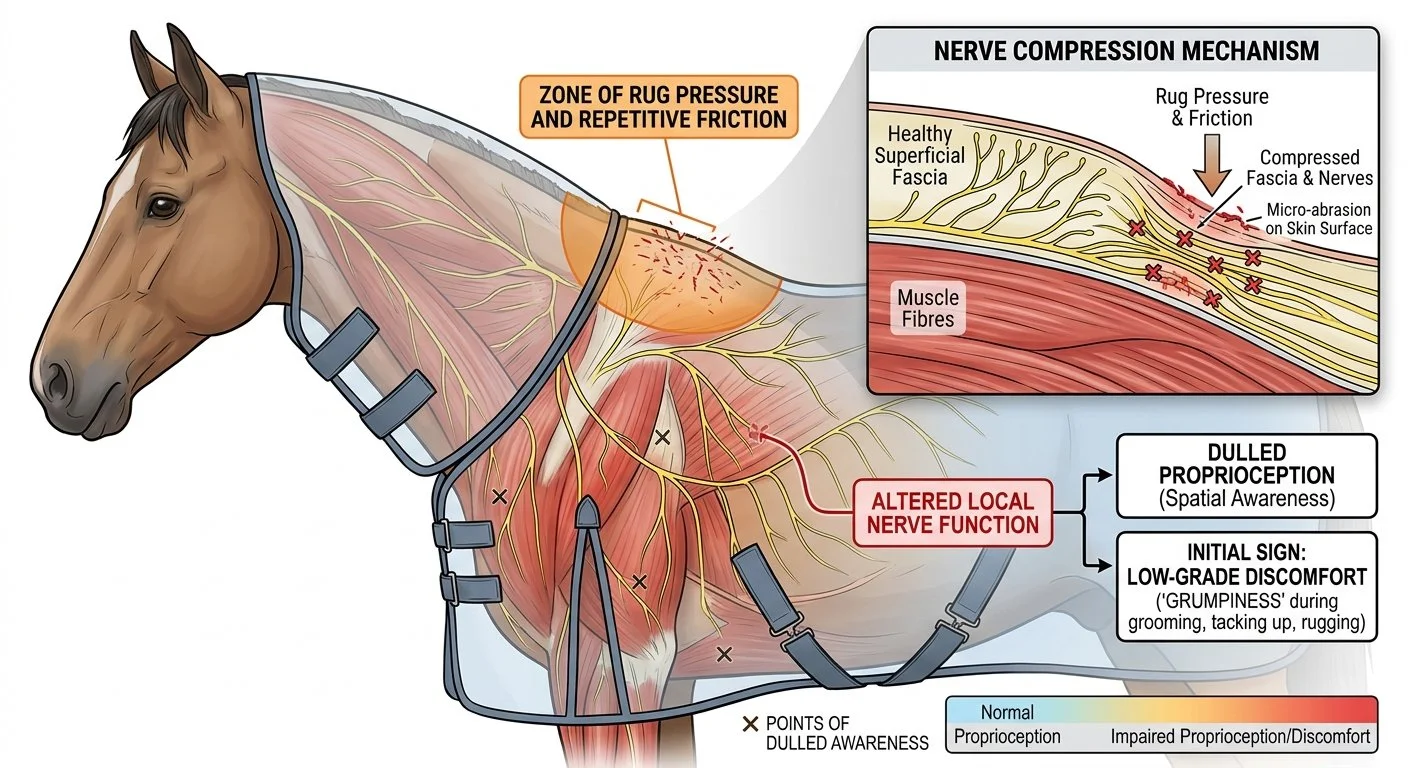
An example of a pressure point at the wither area, present even with a well-fitting rug.
The Solution: How to protect your horse from the perils of rugging
So, as I said at the start of this blog, rugs have their place in our equine care toolkit, and I am not anti-rug by any means. However, managing them with a therapist's eye will make a world of difference to your horse, trust me, and here are a few top tips to help you along the way.
Ditch the 24/7 cycle: This is so important, if you take one thing from this blog, please, please, do this. It is so simple but makes the world of difference. Make it a rule to remove rugs completely AT LEAST once a day. Let the skin breath and allow your horse to shake, roll, scratch and groom (great if you can give them time either tied up close to, or turned out with, another horse to allow natural grooming to take place).
Also, if your horse is unclipped and stabled, consider if they need a stable rug on, especially during milder, wet weather as the stable is proving the protection from the wet, potentially eliminating the need for a rug. This would give you horse a full 12-hour respite, which would be invaluable.
Check the fit: To get optimal benefits from a rug, with minimal negative impact, ensure it is well fitting, sung and secure so that it won’t twist and pull, but not too tight that it is putting unnecessary pressure across key points, such as the chest and withers. Ensure buckles are in good condition and have a backing that avoids direct contact with the horse’s skin, spreading the load and minimising acute pressure points.
Don’t skip grooming: When horses are rugged, and therefore clean, it is tempting to skip grooming. PLEASE DON’T. The reason I say this is two-fold; firstly, time grooming is time without a rug (linking to my first point above). Secondly, the act of grooming will help keep the superficial facia hydrated – a good vigorous grooming session across the whole body will stimulate circulation and encourage fascia mobility.
Incorporate regular bodywork: As an equine massage therapist, I often get asked by clients if they need to continue with regular sessions through the winter as they are cutting back on their riding. My answer is always, YES, and for good reason. Winter throws many challenges at our horse’s bodies, from colder weather, the wearing of rugs that inhibit movement, slippy, deep, waterlogged paddocks and in many cases, reduced turnout and more time standing in a stable.
All the above have a detrimental effect on your horses musculoskeletal system making bodywork during the winter invaluable. Regular massage by a professional therapist will smooth out fascial restrictions and rehydrate the tissue, release muscle spasms and trigger points before they go on to become stress points, compensatory patterns or lameness, maintain mobility and restore optimal performance of the circulatory, lymphatic and nervous systems.
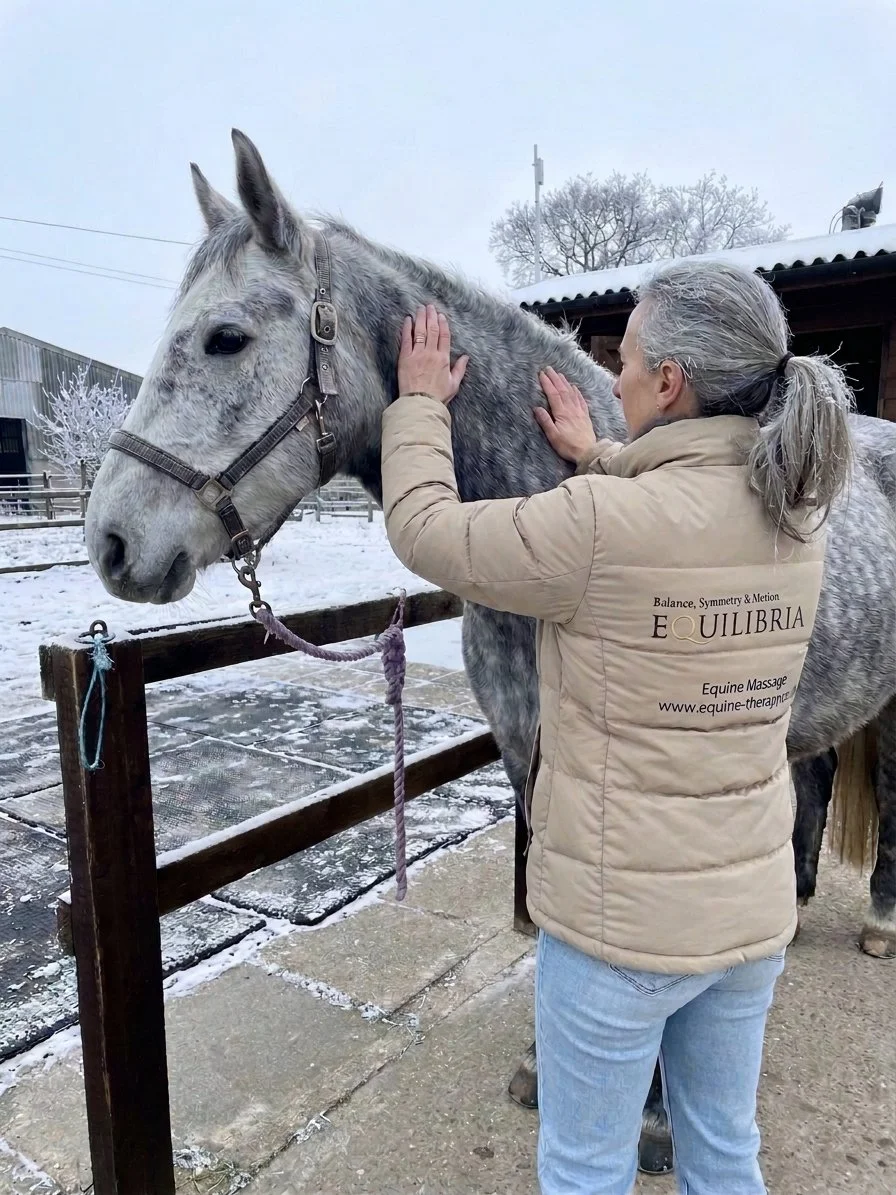
The takeaway…
If your horse is rugged up through the winter, follow my tips and book a targeted bodywork session today to help your horse stay comfortable throughout the winter season.
Call me on 07815 601243 or drop me a message here.
So, that’s it from me today. I hope you have found this blog useful and have at least one helpful tip you can take away from it. Please share it with anyone with horses to help them optimise their rugging strategy too, and if you have enjoyed this blog, you may want to take a look at some of the other topics I have covered such as How Cold Weather Affects your Horse, or The Importance of Correct Saddle Fitting.
As always, don’t forget to check out my Facebook page page which has regular tips and fun facts to help you better understand your horse’s musculoskeletal system which in turn helps us all to be a better riders/carers for our four-legged friends. Please “Like” and “follow” my page to keep up-to-date with my equine ramblings.
Thanks for reading and sharing and I hope to see you back soon! In the mean time, why not check out some of my other blogs and social media posts.