
The back lady…
Throughout my career as an Equine Bodyworker, I have often found myself referred to as ‘The Back Lady’ and I know I’m not alone in this, having spoken to colleagues within the equine bodywork field. ‘The Back Lady’ is a commonly used term to describe a professional therapist, who is not a Vet, but who treats horses that are showing signs of discomfort in their day-to-day workload. This can include a range of therapists such as sports massage and soft tissue bodyworkers, physiotherapists, chiropractors and osteopaths.
I think horse owners use the term ‘The Back Lady” because a lot of the problems they experience with their horses are more highlighted when the horse is saddled and the rider is mounted, so the assumption is that the issue is with the back. Additionally, I think there is a lack of understanding about the differences between the equine therapist roles, so they are bundled into a single solution a.k.a. ‘The Back Lady’ (or man I might add!). I have a separate blog which summarises some of the key differences between the professional fields, which you may find interesting to read, also: Massage, chiro or physio?.
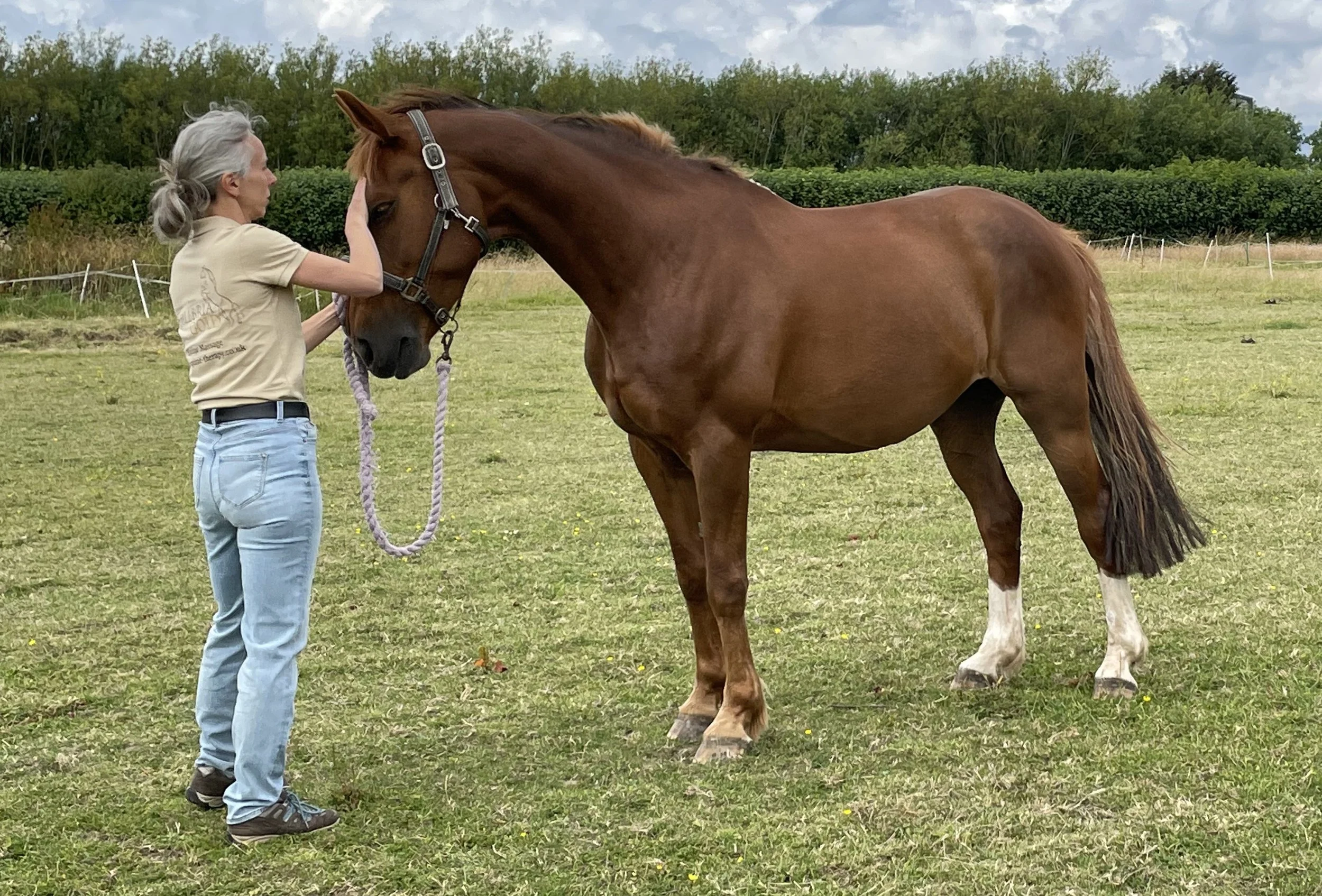
An equine bodyworker works holistically looking at the horse as a whole, not just isolated areas, such as the back.
True or false?
So, while I take no offence to being called ‘The Back Lady’ it isn’t a very accurate description. As an equine bodyworker my approach is holistic, assessing the horse as a whole, not merely focusing on a single area or problem. Although many issues do present themselves in the horse’s back, this is not necessarily the root cause and simply treating the tension through the back may not resolve the underlying problem. Let me explain why…
Locomotive chains
First of all, let’s consider how our horses move. The horse’s body is made up of approximately 700 muscles that are supported by a strong skeletal frame and connected by tendons, ligaments and fascia. These components are all connected and work in harmony to generate movement and stability and these systems are called locomotive chains, as they enable balance, symmetry and motion.
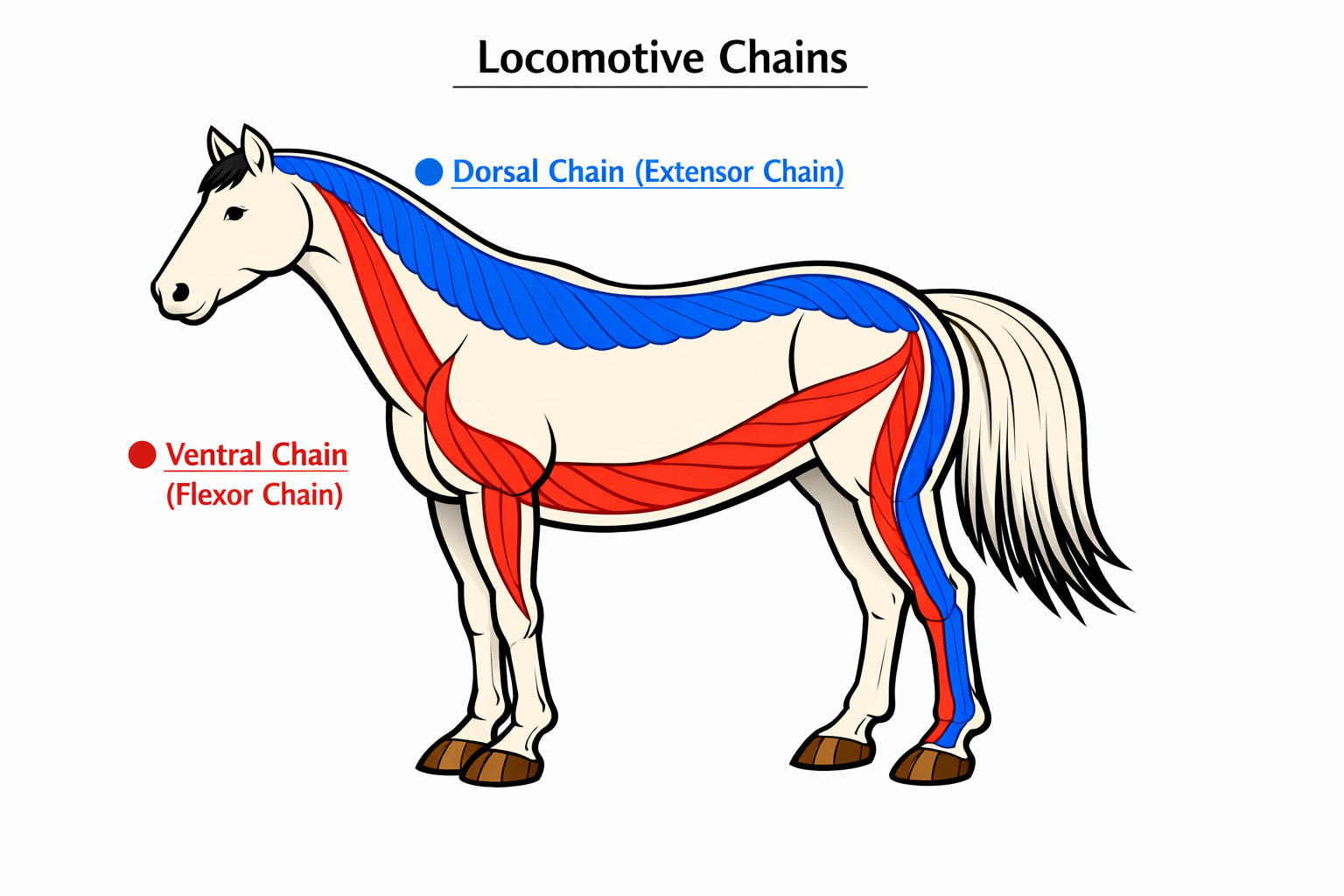
The dorsal chain A.K.A. the topline
Riders commonly refer to the dorsal chain as the topline to describe the muscles running from the poll, down the neck, along the back and over the quarters. The topline is not one single muscle but multiple muscles working together to create movement and how the horse moves will affect the development and condition of these muscle groups. Furthermore, the dorsal chain needs the ventral chain to work in harmony with it to be effective, so while riders often focus on the ‘topline’, a strong, supple ventral chain, including the abdominals, is equally important – especially in supporting the back.
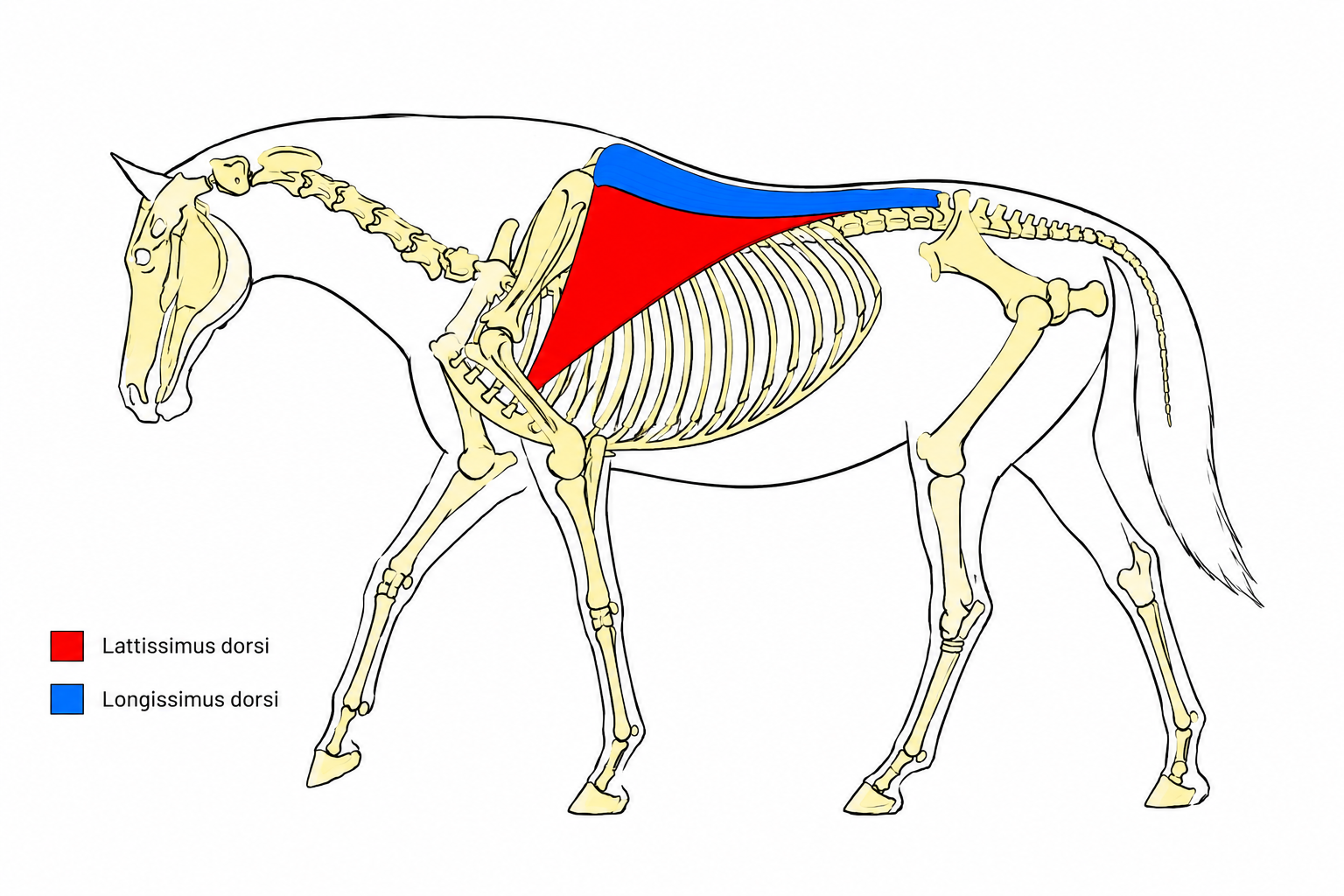
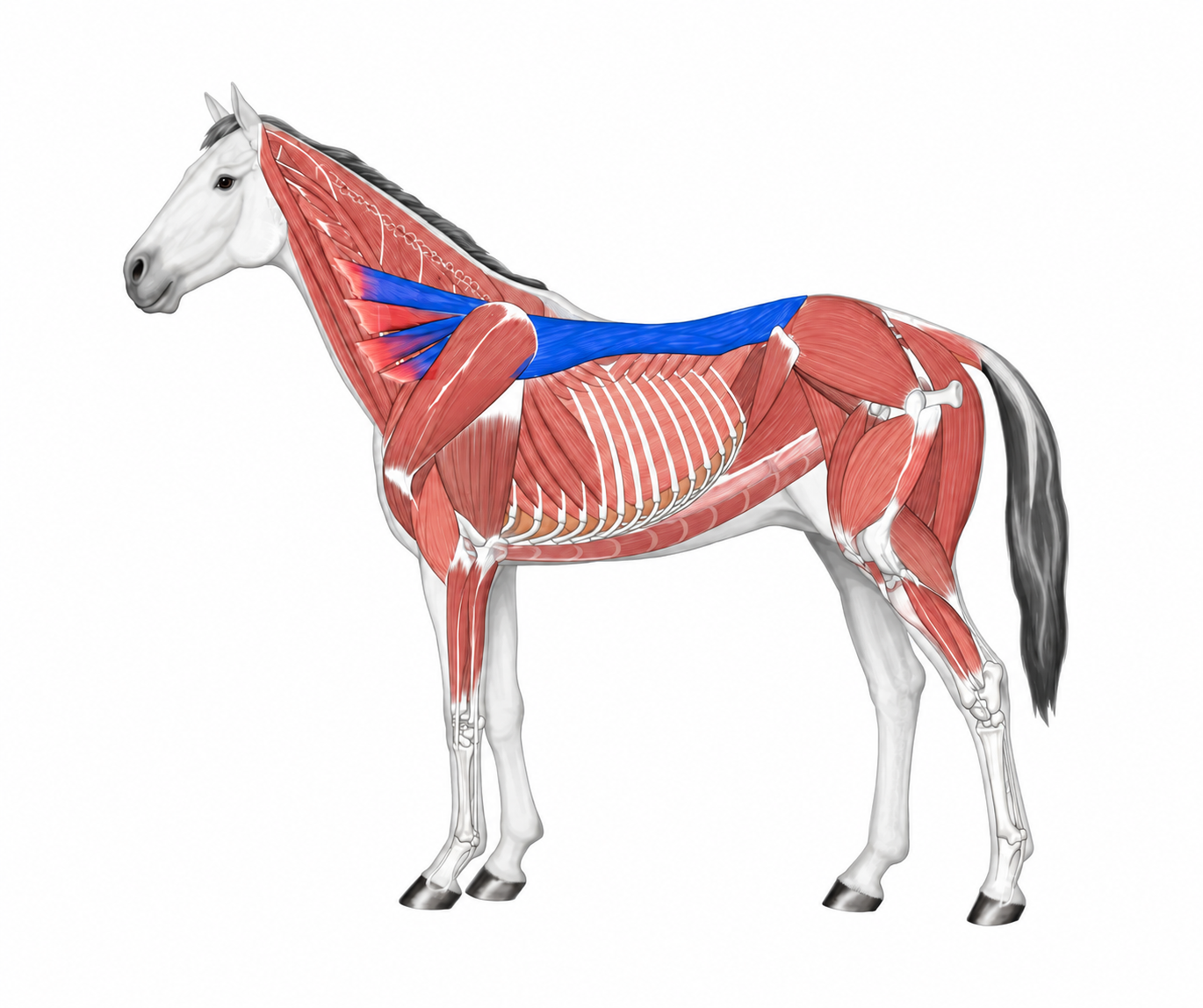
The main back muscle is the longissimus dorsi and this runs the length of the horse’s back, either side of the spine. It originates from the pelvis and inserts at the 4th vertebrae of the neck. The longissimus dorsi transfers energy from the hind quarters and when this is overworked or tight it can become uncomfortable for the horse, but there are many influencing factors that can cause this tension.
Sitting over the top of the longissimus dorsi is the latissimus dorsi. This is the muscle on which you sit when riding and is easy to remember as it is similar in shape to a saddle (some imagination is required here!). It is a large muscle connecting the horses back to the forelimbs so can be prone to tension from external sources such as ill-fitting saddles or imbalanced riders. Tension through the back could present itself in the forelimb and as the latissimus dorsi inserts at the humerus, it plays a vital role in forelimb retraction, therefore may show itself as a shortened stride, restricted shoulder movement, resistance on circles or difficulty with canter transitions.
Referred pain
You may have heard your veterinarian or equine therapist use the term, referred pain. This is used to describe a situation where an initial area of weakness or discomfort causes pain or tension in a different area of the body. Horses are very good at disguising pain (a protective survival instinct) and so when one muscle group is weak or unable to perform, another will compensate to take up the slack and hide the weakness. This is why lameness can go undetected for some time, especially to the untrained eye.
The problem is, the longer compensatory patterns continue with the root cause unidentified, further muscle groups become affected and issues such as muscle atrophy or hypertrophy can develop. This is why regular PREVENTATIVE MAINTENANCE equine bodywork sessions are so valuable as they can identify small niggles before they develop into more serious problems or lameness. A good therapist is trained to identify these problem areas and work with you and your horse to correct any weaknesses or imbalances early on in their development. This may include remedial shoeing by your farrier, specific flatwork exercises with your trainer, dental checks or tack adjustments and where applicable, veterinary tests or assessments may also be required. So, let’s talk about some specific examples of referred pain and common compensatory pattens to help explain this further.
The gluteal muscles
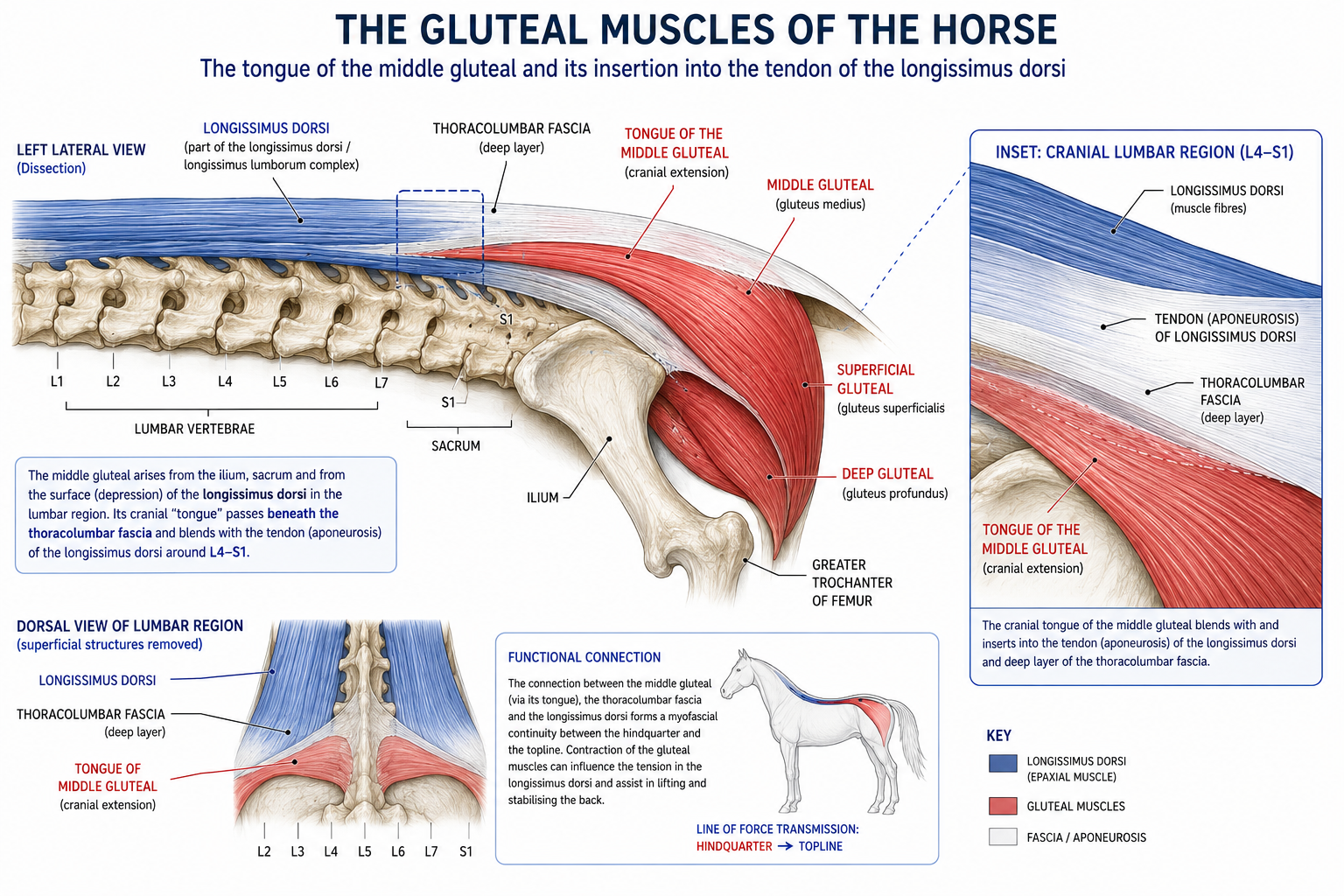
The gluteal muscles, found in the horse’s hindquarters have a direct impact on the back with the tongue of the mid gluteal inserting into the tendon of the longissimus dorsi (the big long back muscle). The mid gluteal is a major muscle that generates power from the hindquarters and strong, well-functioning gluteals actually protect the back. Conversely, if the gluteals are weak or painful, therefore not functioning properly, the longissimus dorsi can often compensate and become overworked.
This is an example of where pain and tension may present itself in the back, but the primary cause is actually the gluteals, so simply addressing the tension through the back will not stop the problem recurring. To prevent repeated back issues, the core problem with the gluteal muscles must be addressed, be that by releasing muscle spasm, improving strength and reducing atrophy or treating a specific injury. A therapist’s job is to identify the underlying cause and advise on appropriate action to rectify it.
The thoracic sling
You may or may not be aware that the forelimbs of the horse are not attached to the skeletal frame, instead they are suspended by a strong group of muscles called the thoracic sling. When functioning well, this group of muscles contribute to shock absorption during weight bearing by enabling the horse to lift up through the thoracic sling, lightening the forehand and reducing compressive load through the spine.
However, if the thoracic sling is weak or poorly coordinated this ‘lift’ is reduced, increasing mechanical strain. As a result, the back muscles (including the powerful, superficial longissimus dorsi and the deep, stabilizing multifidus) step in and overcompensate to stabilize and protect the spine. This is why horses that overload the forehand often suffer with tension through the back.
The sacroiliac joint
The sacroiliac joint (also referred to as the SI joint) is often overlooked as it doesn’t present large visible movement with a range of millimeters (rather than degrees as with other joints). The sacroiliac joint is where the spine meets the pelvis and although its movement is small, it plays a pivotal role in equine biomechanics, transferring propulsive forces from the hindlimbs to the axial skeleton.
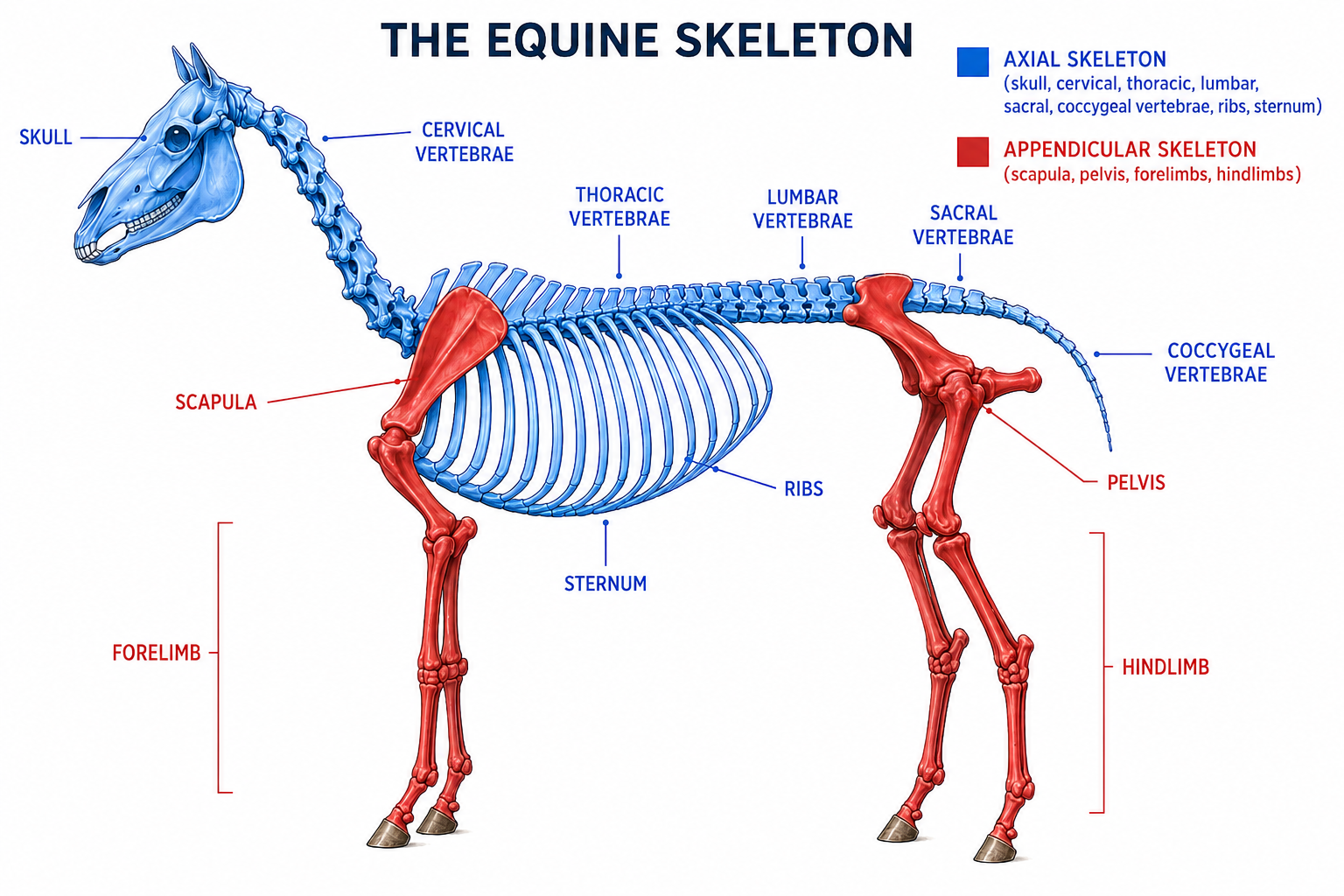
During movement, impulsion generated by the hindquarters must pass through the SI joint in order to allow collection and balance. If the SI joint is compromised this free-flowing forward motion is not possible causing resistance and instability, resulting in the back muscles stepping up to compensate. A weak or compromised SI joint will often present itself with the horse having less impulsion, finding it difficult to step underneath and collect itself, possibly combined with an asymmetrical stride and general lack of balance and coordination behind.
These are just a few examples of commonly identified referred pain symptoms and causes - I could go on detailing referred pain from the jaw and poll, for example, but we will leave that for another day. The key take-away from these examples is to remember that tension through the back if often because of a weakness elsewhere in the body. It is important not to assume the problem is where the lameness or weakness is immediately presenting itself, and to seek professional help to identify the root cause to prevent the problem recurring.
So, back to the ‘back lady’…
Now you have a greater understanding of how your horse moves through an interconnected network of bones, muscles, tendons, ligaments and fascia you can see why the term ‘back lady’ isn’t really accurate. Yes, as an equine bodyworker, a lot of the problems I see are linked to the back in some way, however they are rarely associated with the back alone and it is only by assessing and treating the body as a whole that we can identify weaknesses in these locomotive chains and address the wider problem.
Furthermore, don’t forget that tension is not only caused by movement and the locomotive system, but can also be induced through stress and environmental factors which are very often overlooked. Working holistically enables all possible factors to be considered to improve the overall health and wellbeing of your horse so that you can enjoy optimal performance and more enjoyable rides.
The takeaway…
Old habits die hard, and as I said at the start of the blog, I am not offended by being called the back lady, it just isn’t an accurate description of what I do. A better way to think of me, and other muscular skeletal therapists, is as bodyworkers who look at the whole body and work with the horse as a whole, emotionally and physically, not just at the back.
As always, don’t forget to check out my Facebook page page which has regular tips and fun facts to help you better understand your horse’s muscular-skeletal system which in turn helps us all to be a better riders/carers for our four-legged friends. Please “Like” and “follow” my page to keep up-to-date with my equine ramblings.
Thanks for reading and sharing and I look forward to catching up with you again soon! In the mean time, why not check out some of my other blog posts.